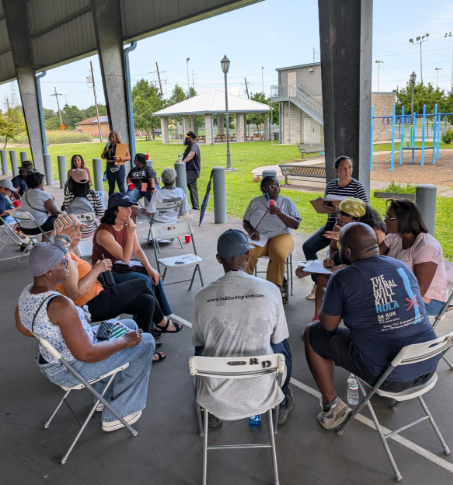
Water Wise Gulf South leads a facilitated discussion with neighbors in the Lower 9th Ward about Green Infrastructure projects in their community.
Last year, the Greater New Orleans Foundation and its subsidiary, the New Orleans Community Support Foundation (NOCSF), launched the Community-Led Green Infrastructure grantmaking program to support community-driven solutions that reduce flooding, improve water quality, and strengthen resilience in Southeast Louisiana’s most vulnerable communities.
As the program reaches its halfway point, the results demonstrate the power of community leadership in addressing some of the region’s most critical climate challenges.
Through an investment of $1.025 million, the Foundation awarded grants to 12 organizations across four parishes in March 2026 to advance community-led green infrastructure projects ranging from urban rain gardens and microforests to bioswales, water harvesting systems, and resilience planning initiatives. These projects were selected, because they place community voice at the center of designing, implementing, and evaluating solutions to flooding and stormwater challenges.
Progress Toward Program Goals
Across the region, the grantees implementing these projects have engaged residents through workshops, educational events, neighborhood planning sessions, and interactive learning opportunities to shape green infrastructure. These efforts are not only advancing project goals, but also strengthening relationships, building local leadership, and increasing community understanding of the value of green infrastructure for stormwater management and climate resilience.
Meaningful milestones have already been achieved by the twelve grantees, including the following highlights:
- Lowlander Center has procured and begun preparing installations for rainwater harvesting systems in the Indigenous communities of Grand Bayou and Pointe-au-Chien, while developing innovative engineering solutions that build on existing local knowledge.
- Freedom to Grow recently launched its Green Infrastructure Cohort, engaging residents from the 7th and Lower 9th Wards in conversations about water management, ecological stewardship, and community resilience.
- Recirculating Farms has used its Rain to Roots project as a platform for community education, hosting free gardening classes and welcoming students and visitors from across the region.
- Urban Conservancy has continued collaborating with residents, the City, and community leaders in New Orleans East to address flooding and climate resilience.
At the program midpoint, 12 of 18 planned awards have been granted reaching 18 communities. Over 800 individuals have participated in 29 environmental education activities and presentations and another 500+ have been engaged through community events.
The projects being developed, implemented, and evaluated all show the power of community-led green infrastructure projects to improve ecosystems and neighborhoods.
Looking Ahead: Round 2 Funding Opportunity
Building on the momentum of the program’s first year, the Foundation will launch Round 2 of the Community-Led Green Infrastructure initiative this fall, granting up to $725,000. Four Stage 2: Community-Owned Implementation Grants of $150,000 each will be awarded to support community-led green infrastructure projects that address stormwater management and flood mitigation in vulnerable communities. Two Stage 3: Community Evaluation & Storytelling Grants of $62,500 each will be awarded to support community-led evaluation, storytelling, and communications efforts that document the impact, lessons learned, and community benefits of existing green infrastructure projects.
To learn more about the application process and eligibility requirements, visit the program website or attend an informational webinar:
- Aug 25, 2026 02:00 PM: Register in advance for this webinar
- Sep 17, 2026 11:30 AM: Register in advance for this webinar
As the program enters its second half, it demonstrates what is possible when communities lead their own resilience efforts. Through continued investment, partnership, and local leadership, the Community-Led Green Infrastructure initiative is supporting a stronger, safer, and more resilient future for Southeast Louisiana.
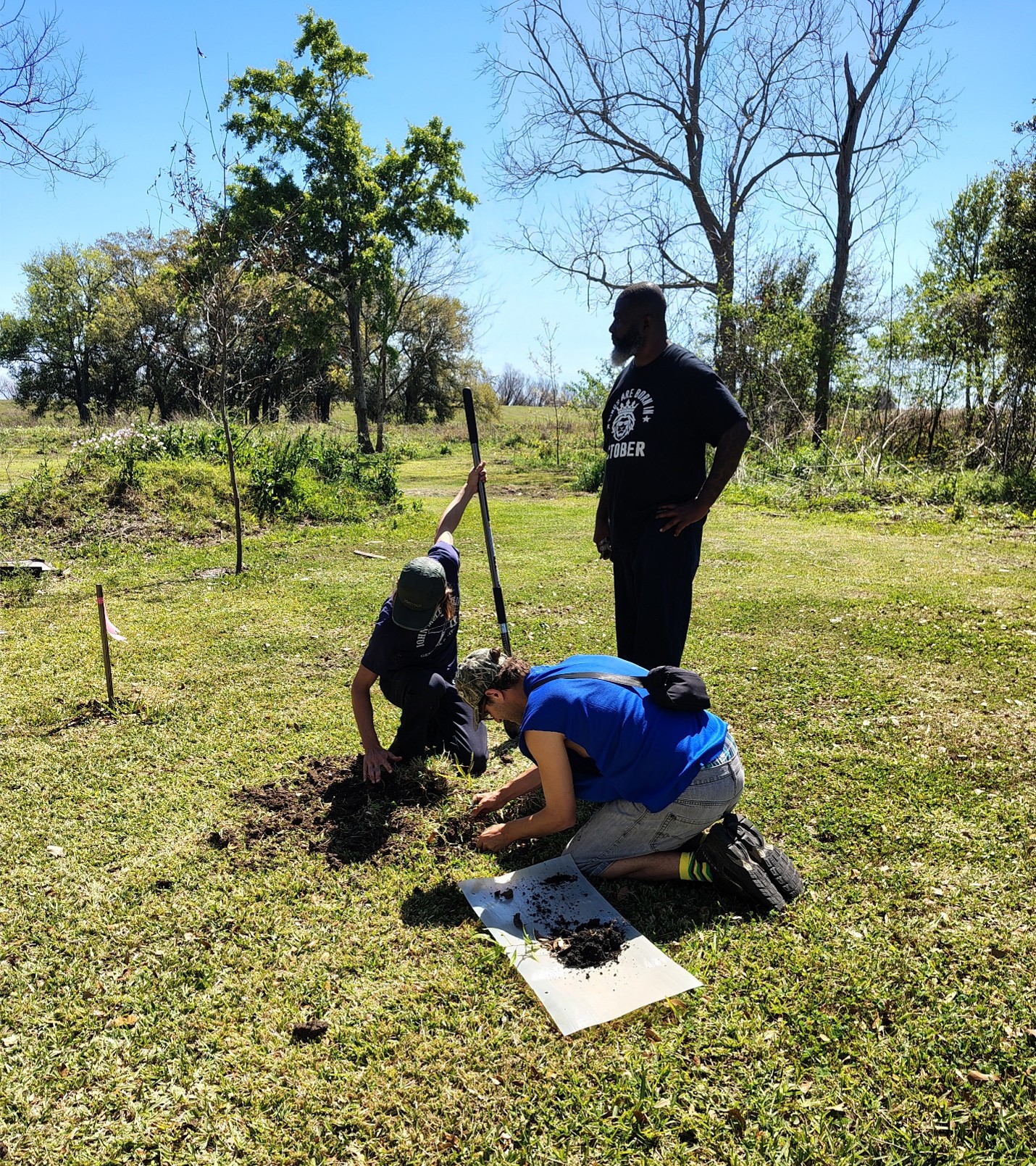
Community members participate in a tree planting event hosted by the Ironton Reconstruction and Development Board.